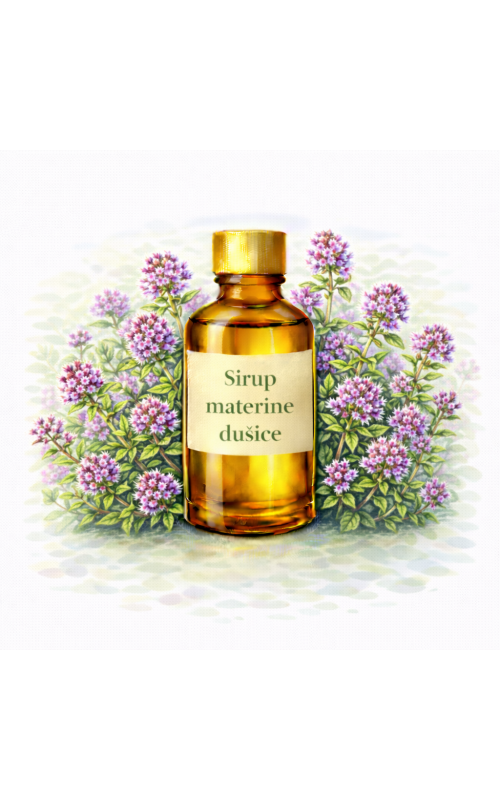
Thyme syrup


| 100 ml |  Until the production of a new stock Until the production of a new stock | 10,00 € |
Wild Thyme Syrup
SHORT PRODUCT DESCRIPTION (LEGAL DESCRIPTION)
Wild Thyme Syrup is a food product prepared from fresh wild thyme and sugar.
The syrup is produced through natural maceration. Plant material is layered with sugar and exposed to sunlight for approximately 50 days. During this period, natural plant juices are released and combine with sugar to form the syrup.
The product is intended for food consumption.
INGREDIENTS
Ingredients:
sugar, fresh wild thyme (Thymus serpyllum).
No added water.
PLANT DESCRIPTION (TRADITIONAL CONTEXT)
Wild thyme (Thymus serpyllum) is a low-growing aromatic plant typical of dry meadows and sunny locations. It has traditionally been present in culinary and herbal practices as part of homemade preparations.
The description of traditional use refers to historical and ethnobotanical sources and does not constitute health or medicinal claims.
USE
The syrup may be diluted in water or used as a flavoring ingredient in beverages and food preparations.
Usage amount depends on individual preference.
STORAGE CONDITIONS
- store in a cool and dark place
- refrigerate after opening
- consume within a reasonable time
- natural product – seasonal variations in color and taste may occur
LEGAL NOTICE
This product is a food product.
The description does not constitute medical or health claims.